

“God, I thank you that I am not like other men, extortioners, unjust, adulterers, or even like this tax collector.”
When Jesus told the parable of the Pharisee and the Publican he directed it to some who trusted in themselves, to those who considered themselves to be righteous, and who treated others with contempt. The Pharisee and the tax collector were symbolic of typical attitudes that are common even in our age today. One man was full of pride and was quite self-righteous. The other was 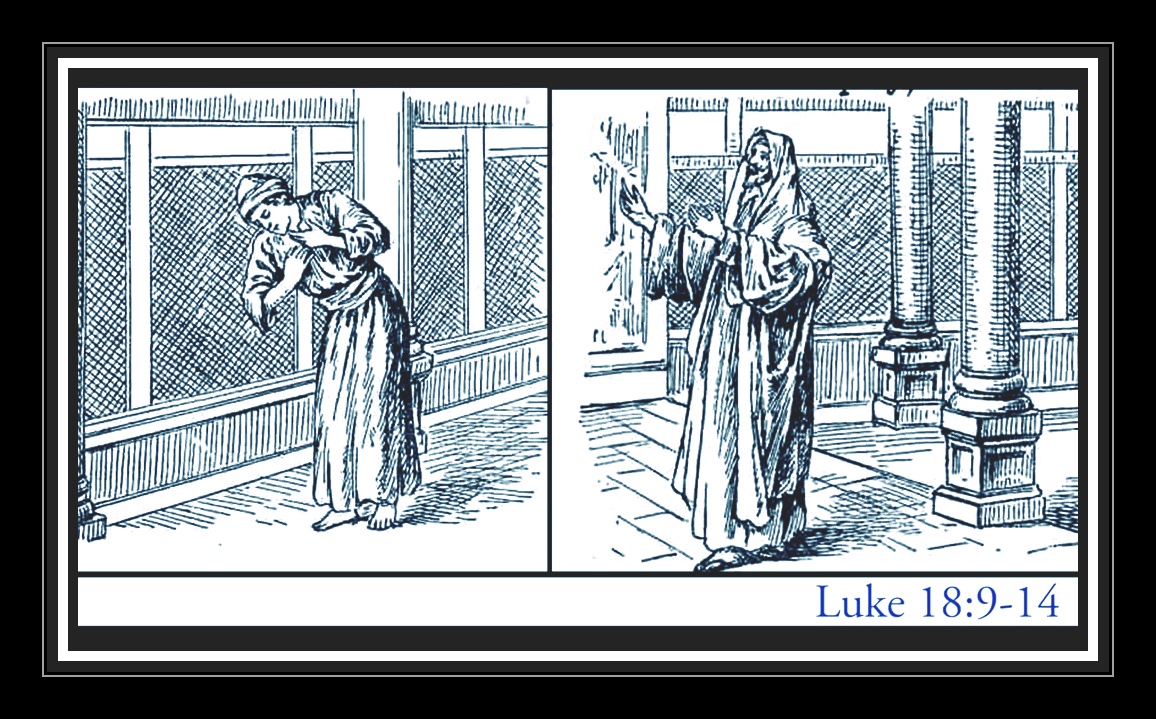 humble; he recognized his sins and asked for God’s mercy and was justified. As I thought about this passage of Luke’s gospel, I thought about the lesson on the significance of humility which is the obvious lesson. But, as with all parables Jesus used, there are many lessons to be learned and from this parable, I sensed the Pharisee’s contempt for others. Contempt of the other can lead to a denial of the very humanity of other people. This disdain is very apparent today in the fear of immigrants and refugees, the distorted views of white supremacists, those who take part in bullying of any sort including cyber bullying, etc.
Even St. Francis of Assisi had a fear and abhorrence of lepers. One day, however, he met a man afflicted with leprosy while riding his horse near Assisi. Though the sight of the leper filled him with disgust, Francis got off his horse and kissed the leper. Then the leper put out his hand, hoping to receive something. Out of compassion, Francis gave him money. But, when Frances mounted his horse again and looked around, he could not see the leper anywhere. It dawned on him that it was Jesus whom he had just kissed. From that encounter, reaching out to the leper colony near Assisi became part of St. Francis’s ministry.
In the Jubilee year 2000, Pope John Paul II made a Pilgrimage to the Holy Land in order to walk where Jesus walked. At each of his stops along this very spiritual journey, he kissed the soil of the land he was in to show a sign of respect and love for the country and its people. There was a minor flap among the Jewish people when he kissed a bowl of Palestinian soil, but John Paul II, following in the footsteps of Jesus, knew that we are all children of the Creator and that true humility comes in recognizing the goodness in others.
Both St. Francis and St. John Paul II’s self-evident human decency and respect for others was what true faith gives rise to. The Pharisee was so blinded by “The Law” and so self-absorbed, that he missed the one law that really matters – Jesus’ Command to “Love one another as I have Loved you.”
Sylvia Bates

